
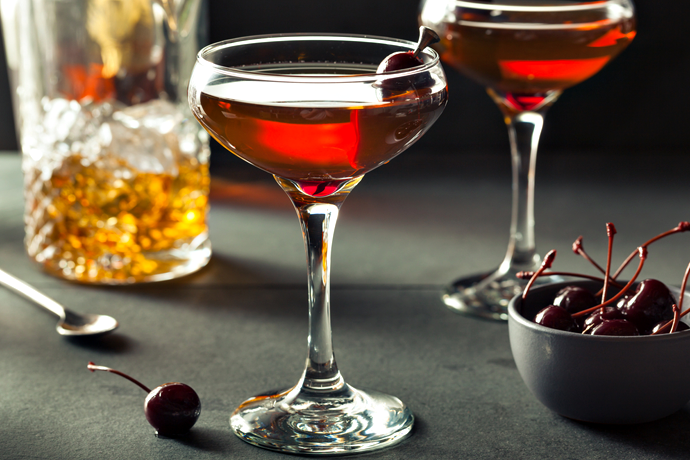
Garnishing.
It’s what sets apart the $47 restaurant entrée from the chicken cacciatore you just made at home.
Okay, so some other things set them apart, too.
But upgrading your garnish prowess is an easy way to make that professional chef/home chef divide a little smaller.
So without further delay, here are the dos and don’ts of garnishing for dishes and cocktails.
Do:
—Invest in a squeeze bottle. Fact: drizzling is just not going to happen without a proper drizzler in your garnishing tool belt. Pick up a few plastic, cone-tip squeeze bottles and fill them with EVOO, chili oil, raspberry puree or anything else that looks delicious in a squiggle shape.
—Play with contrast and color. Balsamic is going to look more dramatic on a white plate, and shaved white truffles will make a stronger impression on a slab of slate. Plus that whole slate thing is really catching on.
—Use a lemon twist to add aroma to a cocktail. Before you add the lemon twist to the drink, fold it and run it along the rim of the glass, applying pressure to squeeze out any remaining juice. The twist will imprint the rim with a citrus aroma that can change the drink’s entire experience.
Don’t:
—Mess with the harmony of flavors. Sure, those sprigs of dill and rosemary are going to add visual appeal. They also don’t make any sense next to sashimi. Get creative, but not at the expense of taste.
—Fall into a rut. So you discovered the miraculous effect a few well-placed scallions have on a dish. Great. Now stop putting scallions on top of everything and learn a new trick.
—Overload your drink. Tiny wooden umbrellas are a perfectly respectable cocktail accoutrement. So are plastic monkeys. Or a kiwi that’s been elaborately carved to resemble a swan. Just not all at the same time, please.
It’s what sets apart the $47 restaurant entrée from the chicken cacciatore you just made at home.
Okay, so some other things set them apart, too.
But upgrading your garnish prowess is an easy way to make that professional chef/home chef divide a little smaller.
So without further delay, here are the dos and don’ts of garnishing for dishes and cocktails.
Do:
—Invest in a squeeze bottle. Fact: drizzling is just not going to happen without a proper drizzler in your garnishing tool belt. Pick up a few plastic, cone-tip squeeze bottles and fill them with EVOO, chili oil, raspberry puree or anything else that looks delicious in a squiggle shape.
—Play with contrast and color. Balsamic is going to look more dramatic on a white plate, and shaved white truffles will make a stronger impression on a slab of slate. Plus that whole slate thing is really catching on.
—Use a lemon twist to add aroma to a cocktail. Before you add the lemon twist to the drink, fold it and run it along the rim of the glass, applying pressure to squeeze out any remaining juice. The twist will imprint the rim with a citrus aroma that can change the drink’s entire experience.
Don’t:
—Mess with the harmony of flavors. Sure, those sprigs of dill and rosemary are going to add visual appeal. They also don’t make any sense next to sashimi. Get creative, but not at the expense of taste.
—Fall into a rut. So you discovered the miraculous effect a few well-placed scallions have on a dish. Great. Now stop putting scallions on top of everything and learn a new trick.
—Overload your drink. Tiny wooden umbrellas are a perfectly respectable cocktail accoutrement. So are plastic monkeys. Or a kiwi that’s been elaborately carved to resemble a swan. Just not all at the same time, please.

